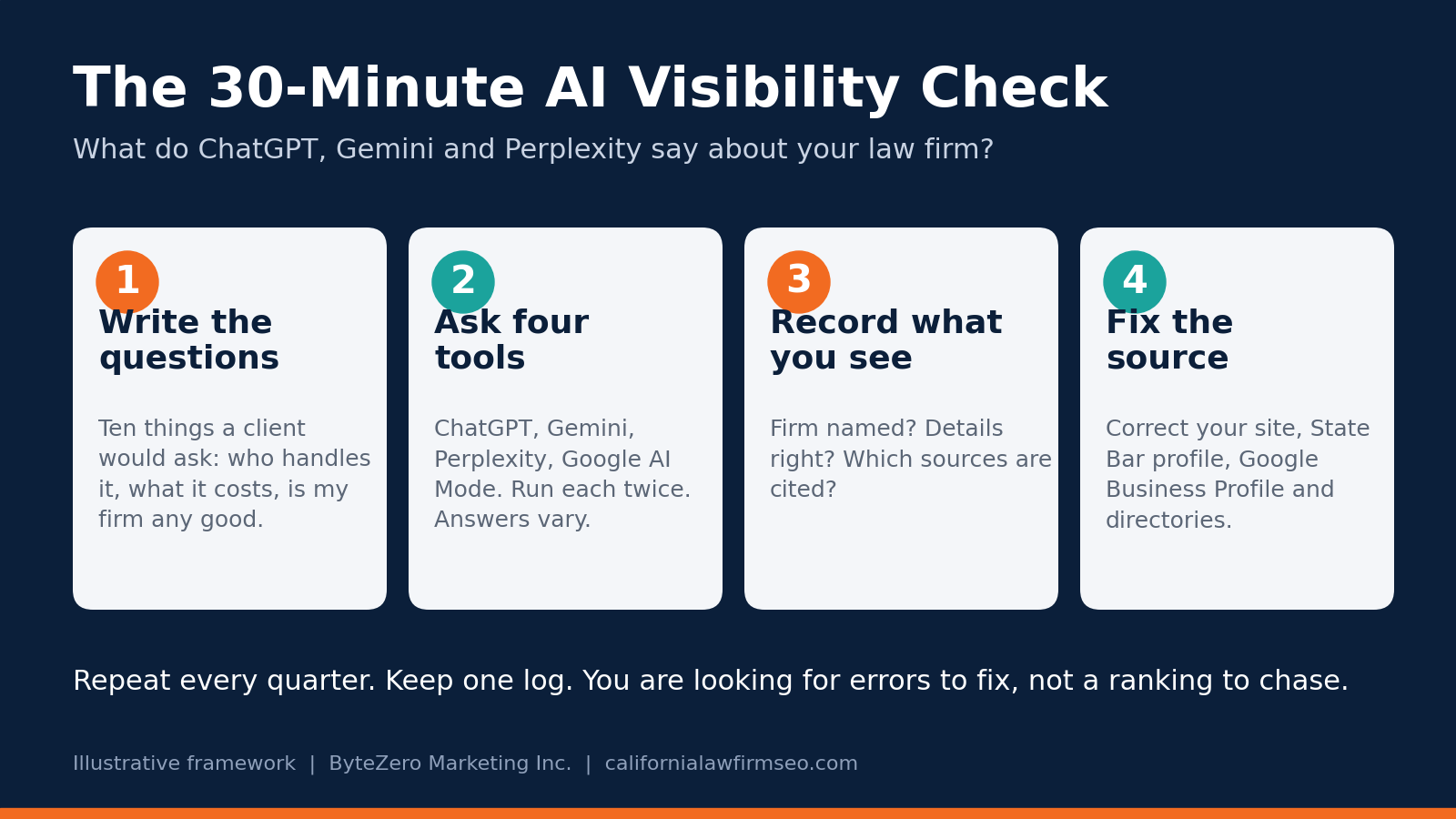
Short answer: you can find out in about 30 minutes. Ask ChatGPT, Gemini, Perplexity and Google's AI Mode the questions your clients would ask, write down whether your firm is named and whether the details are right, then fix the sources that are wrong. You are checking for errors, not chasing a ranking.
By ByteZero Editorial Team · Updated November 2, 2026
Where we'd begin
- OpenAI's help center says ChatGPT search results and citations "can be incomplete, outdated, or incorrect," and its research says models guess because training and evaluation reward guessing over admitting uncertainty.
- Google says that when AI Overviews get it wrong, it is usually from misreading the query, misreading language on a page, or not having much good information to draw on.
- The fix is at the source. California lawyers must update their State Bar address of record within 30 days of a change, and that address is published on the State Bar's website.
- Run the same five questions every quarter, plus a repeat run a week after each check, and keep a log. Answers change between runs, so one screenshot proves little.
Free for California firms
Want these numbers for your own office?
We run the same map pack and AI visibility check for your practice and address in California, then show where you stand. No obligation.
Run my free audit →Prospective clients now ask chatbots things like "Who handles wage claims near Fresno?" or "What does a family law attorney in San Diego cost?" The answer might name three firms, or none. It might describe your firm accurately, or repeat a suite number you left two years ago.
Nobody outside the companies that build these tools knows exactly how they choose which firms to mention, and the methods change. What you can do is look at what they say about you today. That is worth doing even if you never plan to "optimize" anything.
Californians use these tools and still check the State Bar
Search volume shows both habits at once. In Google Keyword Planner (California, Nov 2026), people search for the AI tools by name every month, and they also search for the State Bar's own lawyer lookup.
| Search phrase | Avg. monthly searches, California |
|---|---|
| chatgpt | 16,600,000 |
| gemini ai | 823,000 |
| google ai mode | 60,500 |
| perplexity ai | 49,500 |
| state bar of california attorney search | 33,100 |
| ai overviews | 22,200 |
| california lawyer search | 18,100 |
Source: Google Keyword Planner, California, Nov 2026. Twelve-month averages. These are searches for the tools, not searches inside them.
The State Bar lookup figure is the one to notice. A prospective client who gets your name from a chatbot can check your license and address of record in one more search, so that record needs to match everything else.
Step 1: Write five questions a client would ask (5 minutes)
Use plain words, your city, and your practice area. Mix three kinds:
- Find me a lawyer: "Who handles landlord-tenant disputes in Oakland?" "Best criminal defense attorney in Riverside?"
- Tell me about this firm: "Is [Firm Name] a good personal injury firm?" "What does [Firm Name] handle?"
- Practical questions: "How much does a DUI lawyer cost in Sacramento?" "Does [Firm Name] have Spanish-speaking attorneys?"
Do not write questions designed to fish for flattery. A prompt like "Why is [Firm Name] the best?" tells you nothing useful.
Step 2: Ask four tools the same questions (15 minutes)
Run the same questions in ChatGPT, Gemini, Perplexity and Google's AI Mode or AI Overviews. Use a fresh session without leading context. That is 20 prompts. Run the same set again a week later, because the answers can differ from one run to the next and from one tool to another. Each tool has one habit worth knowing before you start:
| Tool | What its documentation says | What to do in the check |
|---|---|---|
| ChatGPT | Search may run automatically or from the Search tool. It can use an approximate location from your IP address and may rewrite your question into queries sent to search partners. | Put the city in the question. Without it, local answers can lean toward the approximate location ChatGPT infers from your connection. |
| Perplexity | Each answer includes numbered citations to its sources. | Open every citation that mentions your firm and note its date. |
| Gemini | Sources appear under a Sources button when available. Not every response includes them. | Record "no sources shown" when that happens; Gemini did not show links for that response, so there is no cited page to check. |
| Google AI Overviews and AI Mode | Both may run several related searches ("query fan-out"). AI Overviews show only when Google's systems judge them additive to classic Search, so many searches show none. | Record "no Overview" as a result rather than retrying until one appears. |
Sources: OpenAI's ChatGPT search help page, Perplexity's help center, Google's Gemini Apps help and Google's AI features documentation.
Step 3: Record what you see (5 minutes)
A simple table is enough. For each question and tool, note whether the firm is named, whether the details are right and which sources were cited. Two example rows:
| Question | Tool | Firm named? | Details correct? | Sources cited |
|---|---|---|---|---|
| Who handles wage claims in Fresno? | ChatGPT | No | n/a | Two directories, one news article |
| Is [Firm Name] a good employment firm? | Perplexity | Yes | Wrong office address | Old directory listing |
Keep the log in one place, with the date of each run. Next quarter you will want to compare.
AI search check
Is ChatGPT recommending your firm in California?
Our free scan checks how ChatGPT, Gemini and Google AI Overviews describe your firm and which competitors they name instead.
Check my AI visibility →Why AI answers about a firm go wrong
The companies explain their own error modes, and the explanations point to different fixes.
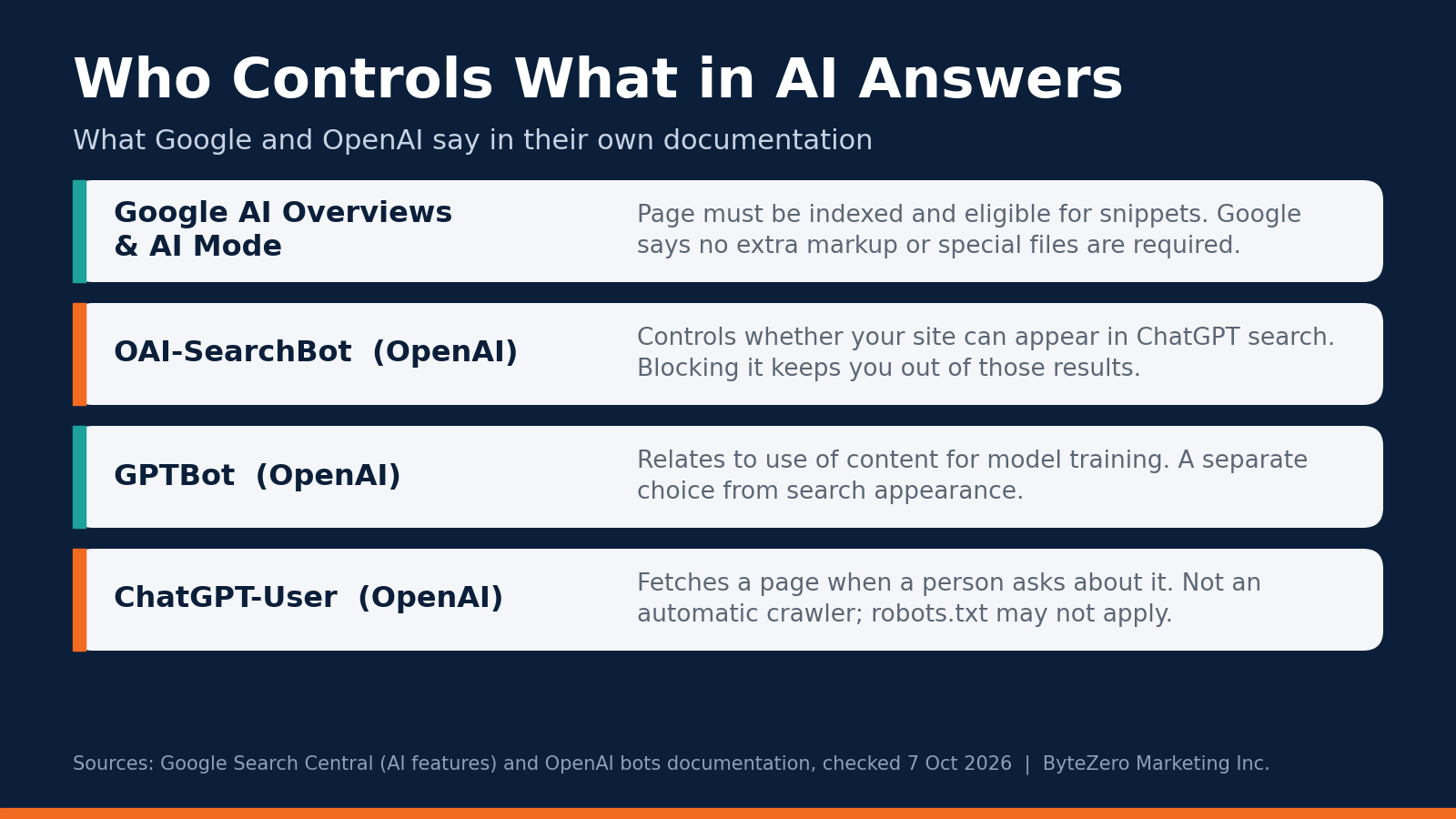
Language models guess. OpenAI's September 2025 research note, Why language models hallucinate, defines hallucinations as "plausible but false statements" and says they persist partly because standard training and evaluation reward guessing over acknowledging uncertainty. OpenAI says ChatGPT also hallucinates. When a model has little about your firm to go on, a confident wrong practice area or founding year is the kind of error this describes.
Search-backed answers inherit their sources. OpenAI's ChatGPT search help page says results and citations "can be incomplete, outdated, or incorrect," and tells users to open the cited source and check its date. If an old directory listing still shows your former address, a tool that cites it will repeat it.
Google describes AI Overviews as tied to its web ranking systems and built to show information backed by top web results. In a May 2024 post, Elizabeth Reid, Google's VP of Search, wrote that when AI Overviews get it wrong, it is usually from "misinterpreting queries, misinterpreting a nuance of language on the web, or not having a lot of great information available." For a small firm, the last one is often the relevant one: if few pages describe the firm clearly, there is little for the system to draw on.
So a wrong detail usually traces to a wrong page somewhere, and a missing firm usually traces to too few clear pages. A model guessing with no source is harder to fix directly; the remedy is to give it accurate pages to find.
Step 4: Sort what you found (5 minutes)
- Wrong details. Almost always an old listing somewhere. Check your website, your State Bar profile, your Google Business Profile and any directories. Fix the ones you control and ask the others for corrections. Differences in firm name, address, phone number, practice areas or languages are the usual cause.
- Firm not named. Not necessarily a problem. Look at which sources the tools cite. If a directory or local article keeps appearing, that is where your information needs to be right.
- Claims you do not make. If a tool says your firm "specializes" in something you do not, or promises results, do not repeat it on your own site or in ads. California Rule of Professional Conduct 7.1 prohibits false or misleading communications about a lawyer or the lawyer's services, in any medium, and treats an express guarantee of the result in a particular matter as misleading.
- Right answer, weak sources. A correct answer pulling from one old page can change. Make sure a current, specific page on your own site says the same thing.
Step 5: Correct the sources you control
Three records are in a firm's own hands. Fix these before writing to any directory.
| Source | How to correct it | What the rules or documentation say |
|---|---|---|
| Google Business Profile | Sign in to the Google Account linked to the profile, select Edit profile on Search or Maps, and save. Where available, check Collected info for details Google gathered elsewhere. | Google reviews changes before they go live. Moving to a new address after verification means verifying again. |
| State Bar of California record | Update the address of record through My State Bar Profile, in the Attorney Record section. | Business and Professions Code section 6002.1 requires notice of a changed office address and phone within 30 days. The State Bar says the address of record is posted on its website. |
| Your website's structured data | Add or correct Organization or LegalService markup with the firm's name, address, telephone and links to its official profiles. | Google says organization markup helps it understand a business's administrative details and tell it apart from others. Google's AI features guide says structured data should match the visible text on the page. |
Sources: Google's Edit your Business Profile help page, the State Bar's address change page, Business and Professions Code section 6002.1, Google's organization structured data guide and its AI features guide.
For a profile you do not manage, such as an old listing created for a former office, Google lets anyone suggest an edit. Our local SEO data on Los Angeles map packs covers the Business Profile fields that affect local results more broadly.
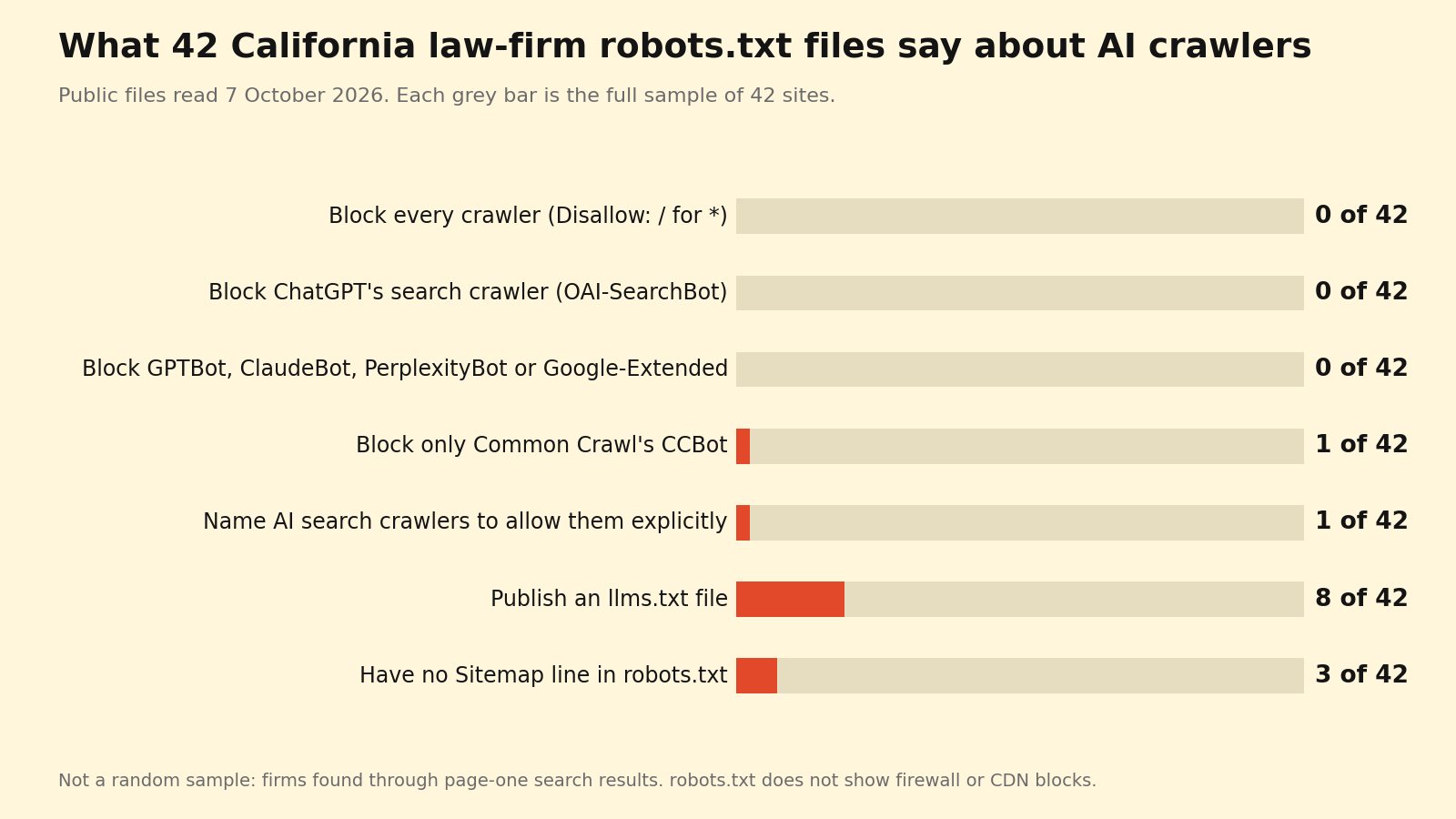
Then check that nothing on your own site blocks the search crawlers these tools rely on. In our robots.txt study of 42 California firms, none blocked ChatGPT's search crawler, so this is rarely the cause, but it takes two minutes to rule out.
Step 6: Repeat every quarter
Pick the three biggest errors and fix those first. Then repeat the check each quarter with the same five questions and the same four tools, plus the repeat run a week later. A small, regular habit beats a one-off project, and it gives you a record of what changed. Note the date you fixed each source, so you can see whether the answer changed after it.
If you use an AI tool to draft web copy, a lawyer should read every line before it goes live. The result is your communication, not the tool's.
What this check will not tell you
It will not tell you how many people use these tools to find a lawyer, and it will not predict leads. It shows whether the information about your firm is accurate and findable. That is a sound first step before spending anything on AI visibility, and if you want help with the rest, our answer engine optimization service for California law firms starts from the same log.
Related reading: how law firms get cited in AI answers, what AI search actually quotes from law firm websites, and our free AI visibility audit.
Before you call
Do I need a special tool to check this?
No. The free versions of ChatGPT, Gemini, Perplexity and Google Search are enough for a first check. A spreadsheet for the log is the only other thing you need.
How often do the answers change?
They can change from one run to the next, and as the tools update. That is why you repeat the run a week later and keep a dated log.
Why does ChatGPT get my firm's details wrong?
Either it is citing an outdated or incorrect source, which OpenAI's help page warns can happen, or it is guessing because it has little to go on. OpenAI's research says models hallucinate partly because training and evaluation reward guessing. Check the cited sources first and correct the ones you control.
What if my firm is not mentioned anywhere?
Check that your site is indexed in Google Search Console, that your firm details match across the web, and that a page on your site answers the client question in plain words. Then check again next quarter.
Can someone guarantee my firm will appear in ChatGPT?
No outside party controls what these tools say. Treat any guarantee as a warning sign.
This article is general information, not legal advice. If you are unsure how Rule 7.1 applies to your website or advertising, consult ethics counsel.
Last checked: November 2026.