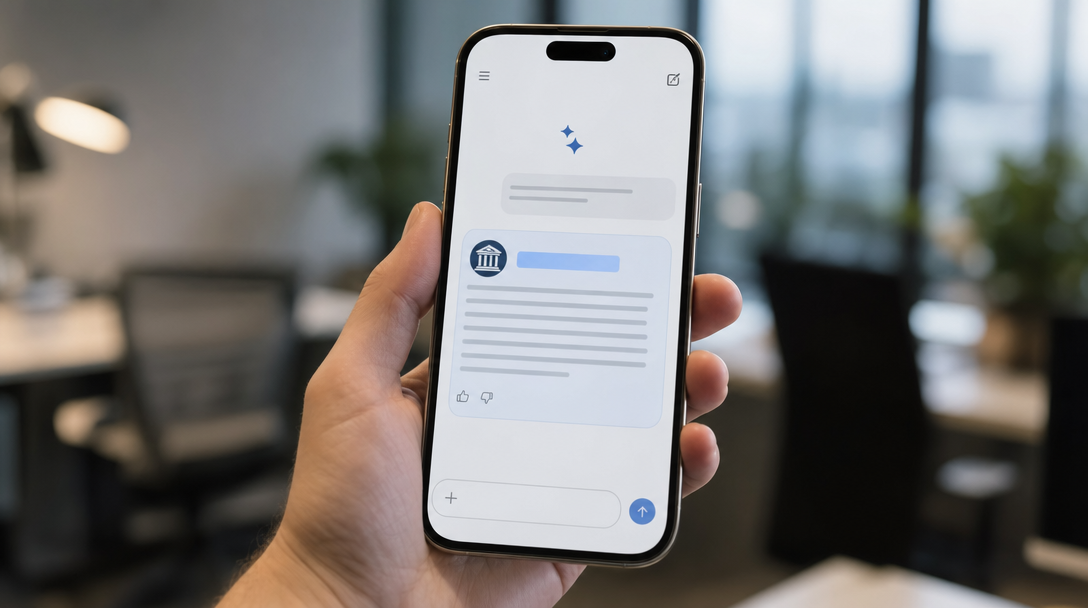
An AI lead machine, in plain terms, is a website that gets named directly inside an AI-generated answer instead of just ranking on a results page. Someone asks ChatGPT "who is a good DUI attorney in Sacramento," and instead of getting ten blue links, they get one paragraph with a firm's name already in it. That paragraph is the new front door, and most California law firm sites are not built to walk through it.
Key Takeaways
- An "AI lead machine" means your firm gets named inside an AI answer, not just ranked on a page a person has to click.
- Citation depends on three separate things: crawler access, structured data, and content that answers the question plainly.
- AI crawlers (GPTBot, PerplexityBot, ClaudeBot, Google-Extended) are not the same user agents as Googlebot — a site can rank fine and still be invisible to all of them.
- 78% of sites have a robots.txt file, but only 4% declare any AI-crawler preference at all — most sites never made a deliberate choice either way.
- Nobody can guarantee a specific AI citation. What is buildable is technical eligibility — the rest depends on a model you do not control.
What "lead machine" actually describes
The phrase sounds like marketing exaggeration until you look at how people search now. Nearly half of U.S. adults use an AI chatbot, and 42% of them use it specifically to search for information — not chat for fun. When a Los Angeles resident asks an AI assistant to name an immigration attorney, criminal defense firm, or personal injury lawyer, the model answers with a short list, sometimes just one name. If your firm is the name, that is the entire funnel compressed into a single sentence, and the visitor who called never touched a search-results page.
"About half of U.S. adults now report using AI chatbots... including roughly one-in-four who use these tools on a daily basis." — Pew Research Center, Americans and AI 2026
How this differs from ranking on Google
Traditional law firm SEO earns a position. A person scans ten results, picks one, and clicks. AI citation skips that step entirely — the model reads your page during a crawl, decides your firm is the right named entity for the question, and states your name inside its own answer. The two systems share some inputs, structured data and clear, accurate content both help either one, but they are not the same mechanism, and optimizing only for the first does not automatically win the second.
| Attribute | Traditional Google ranking | AI citation |
|---|---|---|
| What the visitor sees first | A list of ten blue links | One paragraph, sometimes one name |
| Where the click happens | On the results page, before your site | Often never — the answer is the destination |
| What earns the spot | Backlinks, on-page SEO, page speed, relevance | Crawler access, structured data, named-entity clarity, answer-first content |
| Who controls the crawler | Googlebot, well documented | GPTBot, PerplexityBot, ClaudeBot, Google-Extended — separate agents, separate rules |
| How fast it updates | Days to weeks after a crawl | Varies by model, often less transparent |
The three things that actually earn a citation
Strip away the acronyms and getting cited by an AI engine comes down to three separate, checkable conditions.
Crawler access
An AI model can only cite what it can read. GPTBot, OAI-SearchBot, PerplexityBot, ClaudeBot, and Google-Extended are each a distinct user agent with their own robots.txt rules, separate from Googlebot. A site can be disallowing PerplexityBot by accident — a leftover rule from a security plugin, a default theme setting — and rank normally in Google search while staying completely invisible to that one AI engine. Checking this takes minutes; most firms have never looked.
Structured data that names an entity
An AI model is trying to identify who or what a page is actually about. Schema markup — LegalService, Attorney, FAQPage, BreadcrumbList — is the machine-readable version of that answer. A page with no schema forces the model to infer the entity from prose alone, which it can do, but less reliably than reading a structured field that says so directly.

Content that answers the question plainly
This is the part good legal copywriting already tends to get right and AI-generated filler tends to get wrong. A model lifting an answer needs the actual answer in the first sentence or two of a section, not three paragraphs of preamble before the point. "What should I do after a car accident in Los Angeles" needs to be answered by the second sentence under that heading, not buried under a restated version of the question.
The gap is bigger than most firms assume
Cloudflare's Radar analysis of roughly 200,000 top websites found that while 78% carry a robots.txt file, only 4% declare any AI-crawler preference at all, and fewer than 4% serve content in a format built for AI agents to parse cleanly. Most sites never made a deliberate decision either way — the default settings decided for them. For a law firm competing in a market where a single click can cost hundreds of dollars, being in the 96% that never decided is not a neutral position. It is a gap a competitor can close first.
How to check your own site in about ten minutes
You do not need an agency to find out whether your firm is currently eligible to be cited. Four checks, done in order, tell you most of what matters.
- Pull up your robots.txt directly — yourfirm.com/robots.txt — and look for a Disallow line naming GPTBot, PerplexityBot, ClaudeBot, or Google-Extended. Plenty of firms find one they never added themselves; it shipped with a security plugin or a migration and nobody looked again.
- View source on your homepage and your top practice-area page and search for
application/ld+json. If nothing comes back, there is no structured data for a model to read, no matter how good the prose is. - Read your own FAQ page as if you were the model. Does the first sentence under each question actually answer it, or does it restate the question and then wander for a paragraph before getting to the point? Models lift the sentence that answers; they skip the one that stalls.
- Ask ChatGPT or Perplexity the question a client would ask — "best [practice area] attorney in [your city]" — and see who gets named. If it is never your firm, that is the actual baseline you are working from, not an assumption.
None of the four checks costs anything, and together they take less time than a single client intake call. What they will not tell you is whether fixing them moves the needle on any particular model's output — that part is still genuinely outside anyone's control, which is the honest caveat the rest of this page keeps returning to.
What this is not
It is not a guarantee. No agency, including this one, can promise a specific AI platform will cite a specific firm on a specific timeline — the models are not under anyone's control, and any pitch that implies otherwise should be read skeptically. Under California's attorney advertising rules, an unverifiable outcome claim is a compliance problem before it is an SEO one. What is genuinely buildable is technical eligibility: fixing crawler access, adding the schema that names your firm as an entity, and writing pages that answer the actual question a prospective client is asking. Those three things do not guarantee a citation. They are the precondition for one.
For firms that want a fast read on where they stand, our free AI visibility audit runs 25 checks across crawler access, structured data, and technical foundation in about a minute — the same categories covered above, scored against your actual site rather than estimated.
Frequently asked questions
What does an ai law firm lead machine actually mean?
It means your firm gets named directly inside an AI answer, not just ranked on a results page, when someone asks ChatGPT, Perplexity, or Google AI Overviews a question your firm could answer. It becomes a lead source the same way a map-pack listing is, except the intake happens inside the chat, not on your site.
Can AI search actually send a law firm real clients?
It can send inquiries the same way organic search does, through a visitor who read the AI answer and then called or filled out a form. Nobody in this industry has a verified, audited claim of exact case volume from AI citations yet. Treat it as an emerging channel worth building for, not a proven pipeline you can size a budget around.
How is this different from normal SEO?
Traditional SEO earns a ranking position a person then has to click. AI citation skips the click. The AI model reads your page at crawl time, decides your firm is a relevant named entity for the question, and states your name directly in its answer. The mechanics that earn that citation overlap with SEO but are not identical to it.
Which AI platforms actually cite law firms?
ChatGPT, Perplexity, Google AI Overviews, Microsoft Copilot, and Google Gemini all generate answers that can name a business. Each pulls from different sources and updates on a different schedule, so being cited by one does not guarantee citation by another.
What actually gets a page cited by AI search?
Three things in combination: the page has to be crawlable by the AI bots (not blocked in robots.txt), it needs structured data that names your firm as a clear entity (LegalService, Attorney, FAQPage schema), and the content itself has to answer the exact question plainly enough for a model to lift the answer.
Do AI crawlers need separate permission from Googlebot?
Yes. GPTBot, PerplexityBot, ClaudeBot, and Google-Extended are separate user agents from Googlebot, and a robots.txt file can allow one and block another without you noticing. A site can rank normally in Google and still be invisible to every AI engine if those agents are disallowed.
Can I guarantee my firm gets cited by ChatGPT?
No, and any agency that promises it is making a claim nobody can back up. AI citation depends on a model you do not control, updated on a schedule you do not see. What is controllable is whether your site is technically eligible to be cited at all, which most law firm sites currently are not.
Sources
- Cloudflare — Introducing the Agent Readiness Score
- Pew Research Center — Americans and AI 2026
- Google Search Central — Introduction to Structured Data
- State Bar of California — Rules of Professional Conduct
Related reading: our GEO for California law firms service page covers the full build; the case studies page documents verified, named-client results where we have them.